Why Do I Keep Repeating the Same Relationship Pattern? (and How to Break the Cycle)
By Shenode Nair, breakthrough coach · · 10 min read
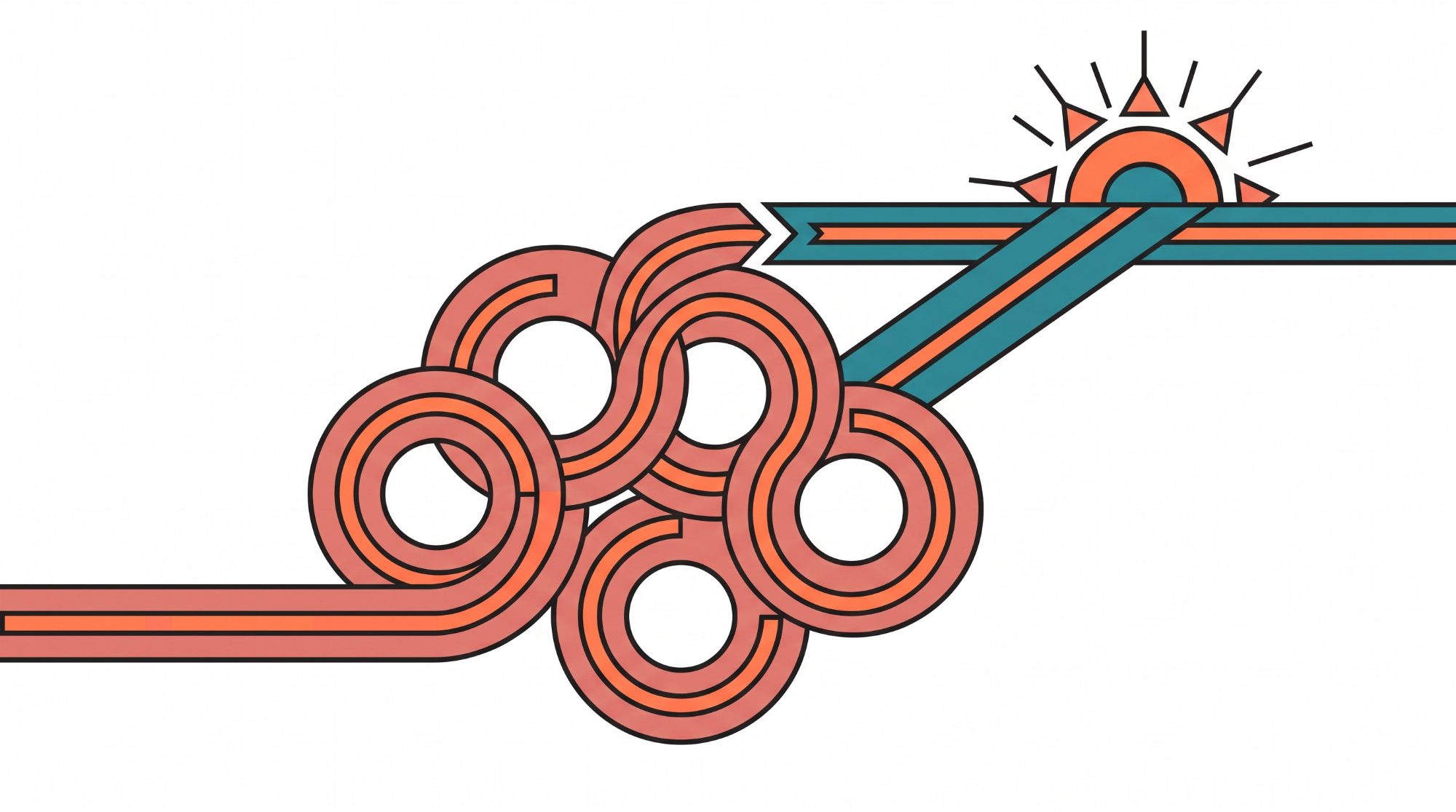
The names change. The cities change. Sometimes even the type of person seems to change. And yet, a few months in, you find yourself in the same place again: chasing someone who keeps pulling away, or feeling smothered and wanting out, or giving everything and getting crumbs in return.
Friends say, "You always pick the wrong ones." You start to wonder whether something is wrong with you, or whether love just isn't meant for you.
Neither is true. What's happening has a pattern, and patterns can be understood and changed.
Looking back often reveals the same story, told with different people.
The short answer
We repeat relationship patterns because our nervous system is drawn to what feels familiar, not necessarily what feels good. Our earliest experiences of love teach us what closeness looks like. If love once came with distance, criticism or unpredictability, partners who recreate that feeling can register as "chemistry". Until the original wound is understood and healed, the mind keeps unconsciously trying to finish an old story.
The most common repeating patterns
See if any of these feel uncomfortably familiar:
The chaser: you fall for people who are emotionally unavailable, and the less they give, the harder you try.
The rescuer: you're drawn to partners who need fixing, and you end up feeling more like their parent than their partner.
The runner: things feel exciting until they get close, then you feel trapped, bored or critical and pull away.
The over-giver: you give and give, rarely receive, and quietly resent it.
The same fight: different partners, but every relationship eventually circles around the same argument.
The disappearing self: you slowly lose your friends, hobbies and opinions inside every relationship.
Notice that most of these aren't about the other person. They're about a role you keep finding yourself in.
Why familiar feels like home
In one line
Your nervous system confuses "familiar" with "safe", so it keeps steering you back towards the emotional climate you grew up in.
Chemistry is often recognition
That instant, magnetic pull towards someone can feel like destiny. Very often, it's recognition. Your body recognises a familiar emotional pattern: the warm-then-cold of a distracted parent, the need to earn approval from someone critical, the tension of not knowing which version of a person you'll get today. Healthy, steady partners can, at first, feel strangely boring by comparison. Not because they are, but because calm is unfamiliar.
The unconscious urge to "fix" the past
Psychologists have long observed that people tend to recreate unresolved situations from earlier in life, sometimes called repetition compulsion. One way to understand it: a part of you is hoping that this time, with this person, the story will end differently. This time the distant one will choose you. This time you'll finally be enough. It's a deeply human hope, and it keeps the cycle running.
Old beliefs choose for you
Beneath every pattern sits a belief formed long ago: "I have to earn love." "If I need too much, people leave." "Closeness means losing myself." "I'm only valued when I'm useful." These beliefs quietly decide whom you're attracted to, what you tolerate and when you run.
A pattern keeps looping until the belief underneath it changes.
Attachment: the blueprint underneath
Attachment theory offers one of the clearest lenses on relationship patterns. In simple terms, the way our early caregivers responded to our needs shaped how safe we feel in closeness as adults:
Anxious patterns often grow from inconsistent care. As adults, people may fear abandonment, need frequent reassurance and feel panic when a partner goes quiet.
Avoidant patterns often grow from care that discouraged emotional needs. As adults, people may value independence, feel uneasy with too much closeness and withdraw under stress.
Secure patterns grow when needs were met reasonably consistently. People can be close without losing themselves, and handle conflict without panic.
Anxious and avoidant people are frequently drawn to each other, which creates the classic chase-and-retreat cycle. The encouraging news is that attachment isn't fixed. Many adults move towards security through awareness, healthy relationships and emotional healing. This is often called "earned security".
"You don't attract the wrong people because you're broken. You're drawn to what your nervous system once had to learn was love."
How to break the cycle
Map your pattern. List your last three or four significant relationships. For each, note how it started, what you felt most often, and how it ended. The repeating thread usually becomes obvious on paper.
Find the original version. Ask: When did I first feel this way? The feeling of chasing, rescuing or disappearing almost always has an earlier chapter, often with a parent or caregiver.
Name the belief. Turn the pattern into a sentence: "I have to work hard to be loved." Seeing it in words loosens its grip.
Notice the "pull" in real time. When you feel intense chemistry or intense anxiety, pause and ask, "Is this attraction, or recognition?"
Practise tolerating calm. If steady, kind people feel boring, give it time. Your nervous system may need a while to learn that peace is not the absence of love.
Heal the wound, not just the behaviour. Willpower can stop you texting the ex. It rarely changes who you're drawn to. That shift comes from releasing the old hurt and rewriting the belief at a deeper level.
That last step is where body-based and subconscious work helps most. Inner child healing, guided emotional release and approaches like Matrix Reimprinting and hypnotherapy work directly with the early memories and beliefs that keep the pattern alive, so new choices start to feel natural rather than forced.
What changes when you heal the pattern
Red flags register as red flags, not as excitement.
Kind, consistent people start to feel attractive.
You can ask for what you need without fear of being "too much".
Conflict becomes something you work through, not a sign the relationship is ending.
You stay yourself inside a relationship, with your friends, voice and interests intact.
Start lighter: Old relationship hurt often sits in the body as tension, heaviness or anxiety. Sukoon is a two-evening live experience on Zoom designed to help you release some of that stored load, gently and in a group.
Why do I keep attracting the same type of partner?
We are drawn to what feels familiar, and familiar is shaped by our earliest relationships. If love once came with unpredictability, criticism or distance, a partner with similar qualities can feel like strong chemistry, even when they aren't good for us.
Is repeating relationship patterns related to attachment style?
Often, yes. Attachment patterns formed in childhood, such as anxious or avoidant tendencies, shape how we bond, what we fear and how we react to closeness or distance. These patterns can change with awareness and emotional healing.
Can I break a relationship pattern without being in a relationship?
Yes. Much of the work happens inside you: understanding the pattern, healing the old wounds behind it and learning what safety actually feels like. Being single can be a very good time to do this, so your next relationship starts from a different place.
How long does it take to change a relationship pattern?
It varies. Many people notice they choose and respond differently within a few months of focused inner work. Deeper attachment patterns can take longer, and progress usually shows up first as small moments of choosing differently.
An invitation
Before the next relationship, come home to yourself
Breaking a pattern starts with lightening what you carry from the last one. Sukoon is a gentle first step: two live evenings where we release stored hurt and tension together, so you can meet love from a calmer, steadier place.
Two live 90-minute evening sessions on Zoom
Guided emotional and body-based release, done gently and safely
Clarity on the feelings that keep pulling you back into old patterns
Runs every month, for ₹99, with a free healing toolkit included
Shenode Nair is a breakthrough coach and hypnotherapist based in Pune. For more than a decade he has helped professionals, founders, parents and homemakers release emotional patterns that logic alone couldn't shift.
Before founding InnerWorkz he worked in corporate IT, including at Dell. He is a certified NLP Practitioner (ABNLP), EFT Level 3 Practitioner (AAMET) and Matrix Reimprinting practitioner, and works with clients in Pune and online across India.
This article is for general education and isn't a substitute for medical or psychological care. If you're in a relationship that involves fear, control or harm, please reach out to a licensed professional or local support services. Shenode Nair is a certified coach and practitioner, not a counsellor, psychologist or medical doctor. Read our full disclaimer.