Why Can't I Relax, Even on Holiday? When Your Body Is Stuck in Survival Mode
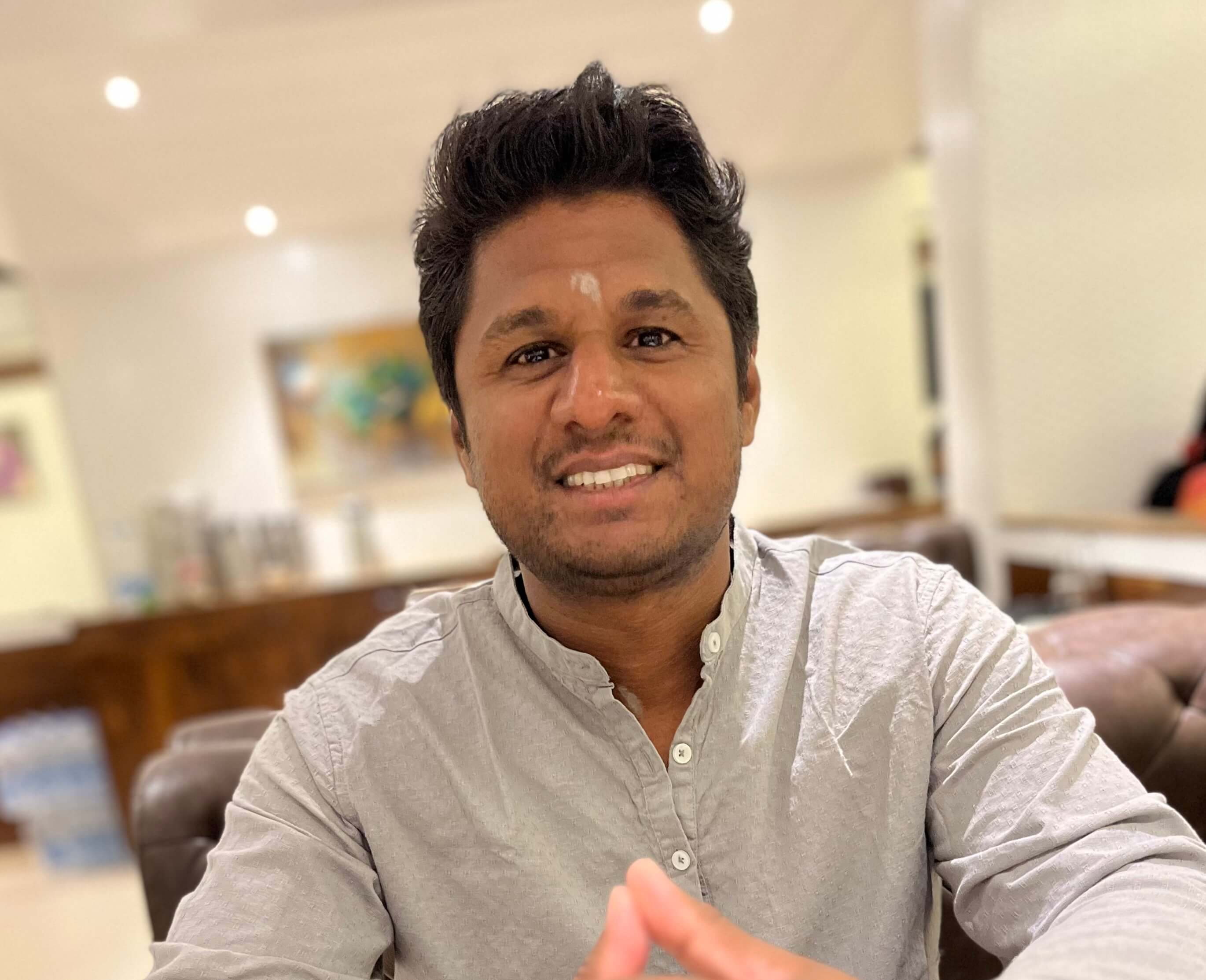
By Shenode Nair, breakthrough coach · · 9 min read
You finally booked the trip. Goa, the hills, or just a quiet weekend at your parents' place. You've been counting down for weeks.
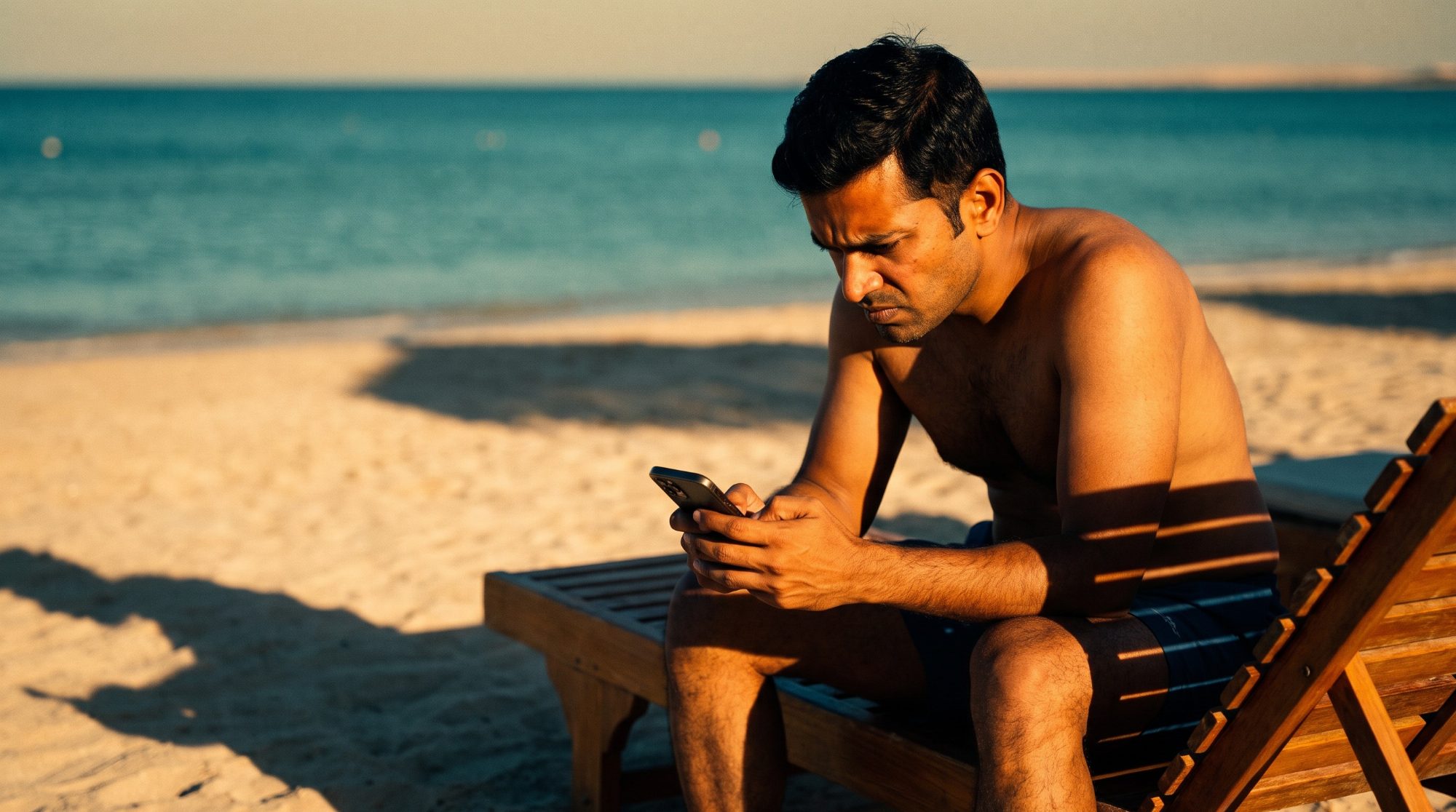
And then you're there, and you can't switch off. You check your phone "just once" every hour. You feel restless lying by the pool. A strange guilt creeps in for doing nothing. Or, worst of all, you get sick on day two and spend the holiday exhausted.
If rest feels harder than work, you're not ungrateful or broken. Your nervous system has simply forgotten how to stand down.
A beautiful place doesn't automatically mean a body at rest.
The short answer
You can't relax because your nervous system has spent so long in "on" mode that it no longer recognises rest as safe. Under chronic stress the body stays on alert, scanning for problems. When you stop, the busyness that kept uncomfortable feelings at bay disappears too, so slowing down can actually make you feel more anxious. Rest becomes possible again when the body is gradually taught that it's safe to let go.
Signs your body is stuck in survival mode
Survival mode doesn't always look dramatic. Often it looks like being "very productive". Common signs include:
Tired but wired: exhausted all day, then mentally buzzing at night.
Can't sit still: you tidy, scroll or plan the moment there's a gap.
Hyper-alert: small sounds startle you; you notice every message or mood shift.
Crashing on breaks: headaches, colds or deep fatigue as soon as you stop.
Rest guilt: a nagging voice that says you should be doing something useful.
Why rest can feel unsafe
In one line
A nervous system that has learned "stopping is dangerous" will keep you moving, even on a beach.
Your accelerator has been stuck down
Think of your nervous system as having an accelerator (the stress response that energises you for action) and a brake (the rest-and-digest response that lets you recover). Healthy systems switch smoothly between the two. After months or years of deadlines, caregiving, financial worry or emotional strain, the accelerator can get stuck. Stress hormones become your normal fuel, and the brake gets rusty from lack of use.
Busyness was keeping feelings at bay
For many people, constant activity is also a way of not feeling. As long as you're busy, there's no space for grief, loneliness, disappointment or worry. The moment you lie down with nothing to do, those feelings get room to surface. Your system interprets that discomfort as danger, so it pushes you to pick up the phone or find a task. Some people even experience a wave of anxiety specifically when they try to relax.
It may have been learned early
If you grew up in a home where things could go wrong at any moment, staying alert was smart. If rest was criticised as laziness, or love came through being useful, your body learned that slowing down carries a cost. Those lessons don't disappear just because life is different now.
The guilt of doing nothing
Rest guilt is especially strong in cultures that equate worth with effort. Many of us grew up hearing that sitting idle is wasteful, or watching parents who never seemed to stop. So even when your body is begging for rest, a voice says: you haven't earned this.
"Rest is not a reward for finishing everything. It's what makes it possible to keep going at all."
A useful reframe: rest is maintenance, not indulgence. Your body repairs, your memory consolidates, your emotions settle and your patience returns during rest. Skipping it doesn't make you more productive; it just makes everything cost more.
How to teach your body to rest
You can't force relaxation, any more than you can force sleep. What you can do is give your nervous system repeated, gentle experiences of safety, until stopping stops feeling threatening.
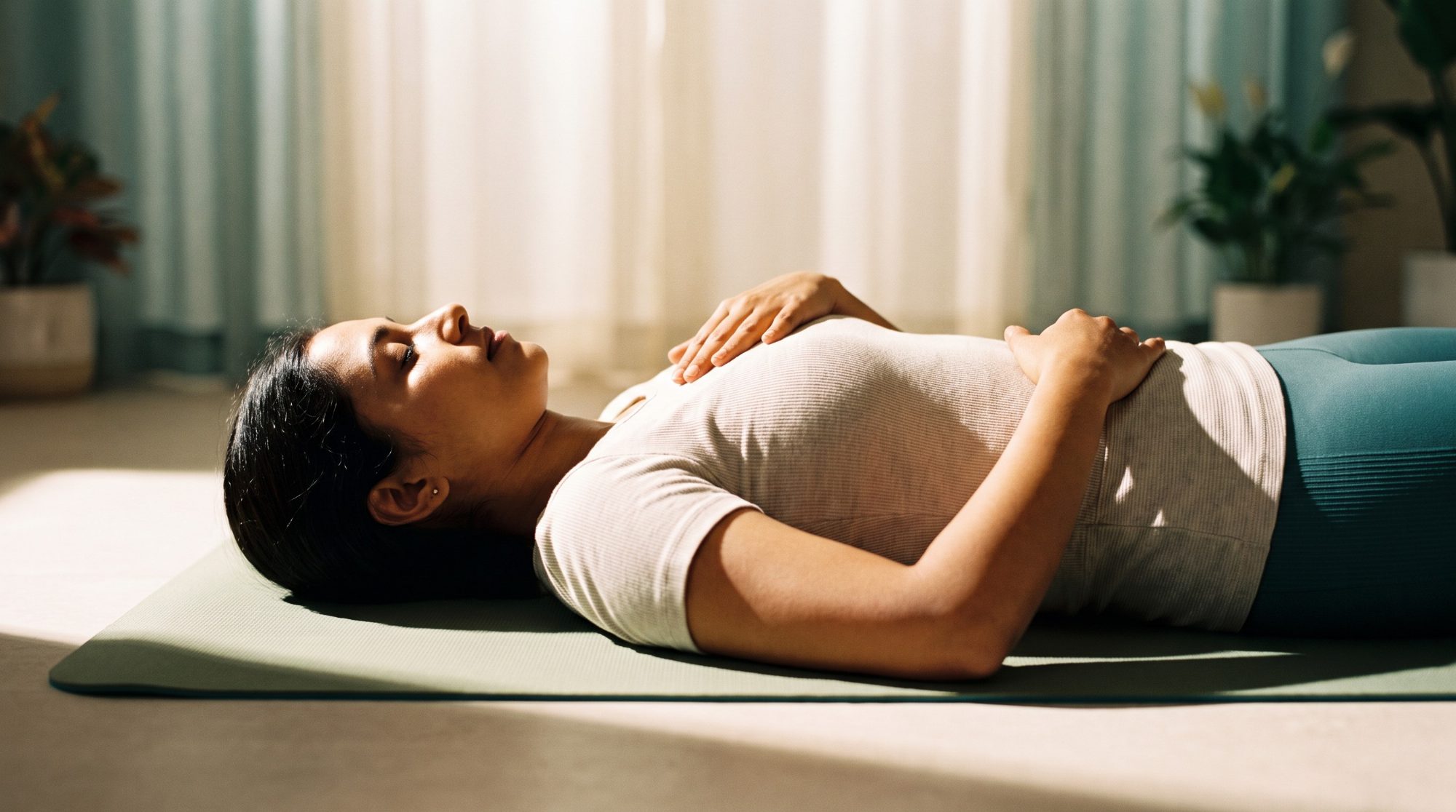
Start small. If an hour of doing nothing feels unbearable, start with five minutes. Sit with a cup of tea, no phone, and simply notice your breath.
Lengthen your exhale. Breathing out for longer than you breathe in gently activates your body's calming response. Try in for four, out for six or eight, for two minutes.
Release tension physically. Shake out your hands, roll your shoulders, take a slow walk. The body often needs to discharge stress before it can settle.
Make a "transition ritual". A shower, a change of clothes, a short walk after work: something that tells your system the working day is over.
Let feelings come, briefly. If emotion rises when you slow down, let it be there for a few breaths. Name it: "That's sadness." "That's worry." Feelings that are allowed tend to pass.
Plan a soft landing for holidays. Expect the first day or two to feel restless or tired. That's the body catching up, not the holiday failing.
Rest is a skill your body can relearn, a few minutes at a time.
When it's deeper than habit
If you've been in survival mode for years, or since childhood, simple techniques may only take the edge off. That usually means the body is still holding stress from specific experiences. Releasing that stored load, through guided emotional release, somatic practices, EFT or, for some people, deep relaxation work such as hypnotherapy, helps the nervous system reset its baseline, so calm becomes your default rather than a rare visitor.
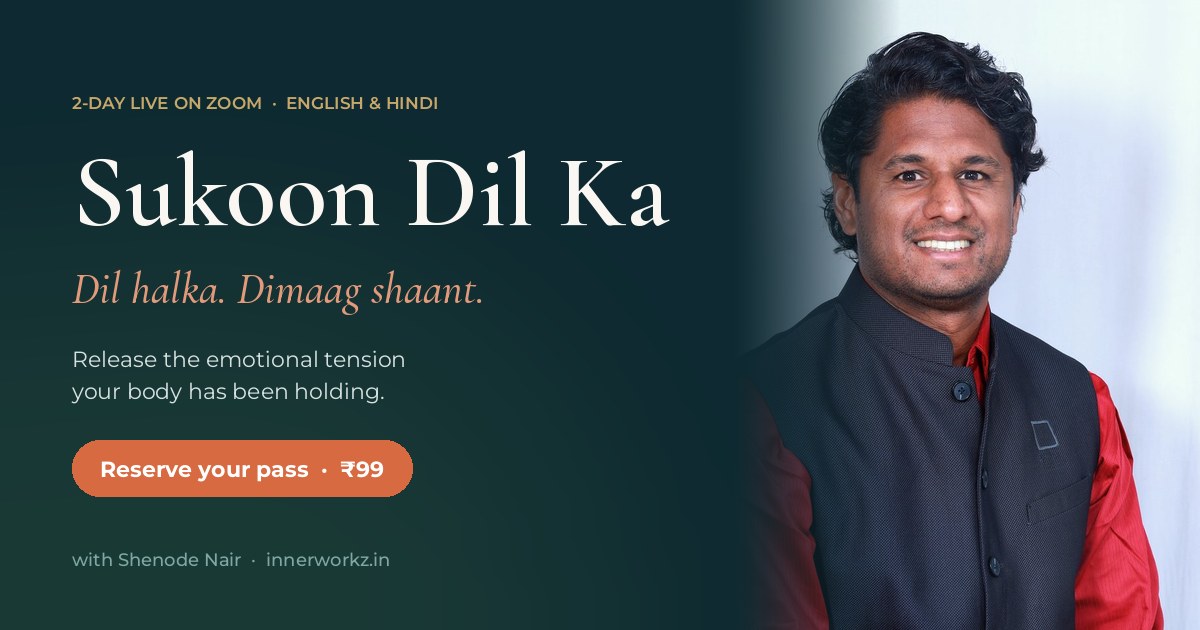
Try it in a guided space: Sukoon is two live evenings on Zoom built around exactly this: helping your body put down stress it has been carrying, so rest starts to feel possible again.
Holidays you can enjoy from day one, not just the last day.
More patience and warmth with family and colleagues.
Clearer thinking and better decisions, because you're not running on fumes.
Fewer stress-related aches, headaches and stomach issues for many people.
Common questions
Why do I feel anxious when I try to relax?
If your nervous system has been in high alert for a long time, slowing down can feel unfamiliar and even unsafe. When the busyness stops, feelings and sensations you've been outrunning come to the surface. This is sometimes called relaxation-induced anxiety, and it eases as your body learns that rest is safe.
Why do I get sick or feel worse on holiday?
Many people notice they fall ill, feel exhausted or get headaches at the start of a break. One common explanation is that the body has been running on stress hormones, and when the pressure lifts, the tiredness it was masking finally shows up.
What does survival mode feel like?
Survival mode often feels like being constantly on guard: a busy mind, tense muscles, shallow breathing, difficulty sleeping, irritability, and a sense that you can't stop or something will go wrong. People often feel tired and wired at the same time.
Is it lazy to need rest?
No. Rest is a biological need, not a reward you have to earn. A rested nervous system thinks more clearly, handles stress better and has more patience for the people around you.
An invitation
Give your body permission to rest, with Sukoon
Sukoon means calm, and that's what these two live evenings are designed for. Instead of trying to think your way into relaxation, we guide your body through releasing the stress it has been holding, so stopping finally feels safe.
Two live 90-minute evening sessions on Zoom
Guided release of stored stress and tension, done gently and safely
Simple practices to switch off at the end of the day
Runs every month, for ₹99, with a free healing toolkit included
Shenode Nair is a breakthrough coach and hypnotherapist based in Pune. For more than a decade he has helped professionals, founders, parents and homemakers release emotional patterns that logic alone couldn't shift.
Before founding InnerWorkz he spent years in corporate IT, including at Dell, so he knows life in survival mode from the inside. He is a certified NLP Practitioner (ABNLP), EFT Level 3 Practitioner (AAMET) and Matrix Reimprinting practitioner, and works with clients in Pune and online across India.
This article is for general education and isn't a substitute for medical or psychological care. Persistent exhaustion, poor sleep or frequent illness can have medical causes, so please see a doctor if they continue. Shenode Nair is a certified coach and practitioner, not a counsellor, psychologist or medical doctor. Read our full disclaimer.