How to Build Emotional Regulation: A Realistic 30-Day Plan That Works With Your Nervous System
By Shenode Nair, breakthrough coach · · 10 min read
You've read the articles. Maybe you downloaded a breathing app. You start strong on Monday, and by Thursday a tense meeting or a late-night argument pulls you straight back into old habits. Then the voice arrives: see, nothing works for me.
It does work. It just needs a plan built around how nervous systems actually change: slowly, through repetition, with kindness.
This four-week plan is designed for real life. Each day asks for a few minutes, not an hour.
Small, steady practices change the nervous system more than occasional big efforts.
The short answer
Build emotional regulation in layers over about 30 days. In week one, steady your body with sleep, food, movement and a daily minute of slow breathing. In week two, learn to notice and name feelings and triggers. In week three, practise pausing and choosing your response. In week four, release old emotional charge and practise repair. Small daily practices beat occasional big efforts, and slips are a normal part of the process.
Why willpower fails
When you're flooded with emotion, the thinking part of your brain, the part that remembers your good intentions, goes quieter. So the plan you made at breakfast is simply unavailable at 6 pm in the middle of an argument. This is not a character failure. It's how the brain handles perceived threat.
The fix is to practise when you are calm, in small doses, until the response becomes automatic. Think of learning to swim in a pool before you ever need to swim in the sea. That is exactly what the next 30 days are: pool time.
The 30-day plan, week by week
How to use it
Pick a fixed time each day, ideally after you wake or before bed. Tick off what you did, not what you missed. If you skip a day, simply pick up the next one. The rule is "never miss twice".
Week 1 (days 1 to 7): Steady your base
Regulation starts with a body that isn't running on empty. Don't try to manage emotions yet. Just make your body a safer place to live in.
Sleep window: choose a regular bedtime and wake time, and protect the last 30 minutes of the evening from screens.
Move daily: a 10-minute walk counts. Movement helps the body discharge stress.
Eat regular meals: low blood sugar makes everything feel more urgent.
One-minute breathing, three times a day: breathe in for 4, out for 6 to 8. (See the 5-minute reset for more tools.)
Week 2 (days 8 to 14): Notice and name
You can't regulate what you can't see. This week is about building awareness without trying to fix anything.
Three check-ins a day: ask, "Where do I feel this in my body? What word fits best? How strong is it, from 0 to 10?"
Grow your feeling words: go beyond "stressed" to hurt, ashamed, overlooked, anxious, resentful, lonely, overwhelmed, disappointed.
Keep a trigger note: when you react, jot down who, what, what your body did, and the story your mind told.
On day 14, read your notes. Which two or three triggers keep repeating?
Pick one recurring trigger from week two and write an if-then plan: "When my manager sends 'we need to talk', I will take three slow breaths and reply after five minutes."
Memorise one time-buying sentence ("Let me think and get back to you").
Notice recovery time: how long until you feel yourself again? Even a small improvement counts.
Gentle movement in nature helps the body discharge what the mind can't think away.
Week 4 (days 22 to 30): Release and repair
Skills help most when old emotional charge isn't fighting them. This week you start to ease the load underneath.
Once or twice this week, do a release practice: expressive journaling, EFT tapping, a guided emotional-release session or a safe conversation with someone who listens.
Ask gently: "Where else have I felt this?" Often, a trigger at work leads back to a school classroom or a childhood kitchen. Just notice; no need to dig.
Have one repair conversation you've been avoiding, even if it's two sentences.
On day 30, write down what has changed, and which two practices you'll keep.
How to know it's working
Don't measure whether you still feel anger, fear or sadness. You will, and that's healthy. Track these three instead:
Intensity: are your peak reactions a little lower on the 0 to 10 scale?
Recovery time: are you back to yourself faster than before?
Repair speed: are you coming back to say "I'm sorry" or "let me try again" sooner?
"Progress isn't never reacting. It's reacting less, recovering faster and repairing sooner."
Common stumbling blocks (and what to do)
All-or-nothing thinking. One bad day doesn't cancel the month. Follow the rule: never miss twice.
Shame after a slip. Shame narrows your window of tolerance. Replace punishment with repair.
Skipping sleep. It is the fastest way to undo the plan. Protect it first.
Practising only in crisis. Do the breathing and naming when things are easy; that's how they become available when things are hard.
Doing it completely alone. We learn calm from other calm nervous systems. A safe friend, partner, coach or group makes this far easier.
When you need more than a plan
A plan builds skill. But if your strongest triggers sit on old wounds, such as being criticised, ignored or frightened as a child, skills alone will only go so far, because the emotional memory still fires first. That is when guided emotional release helps most: it lowers the charge so your new tools can actually reach you. If you also live with symptoms of depression, anxiety or trauma, or you ever think of harming yourself, please see a doctor or a qualified mental health professional alongside any coaching.
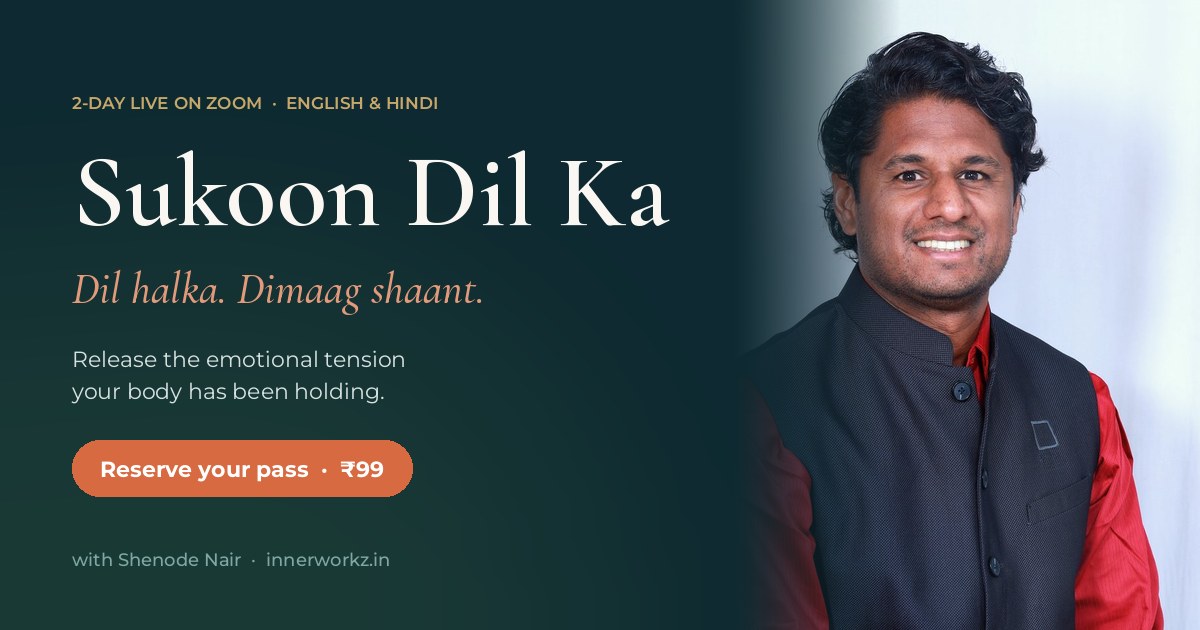
Begin with a gentle reset: Sukoon is two live evenings on Zoom where you are guided to feel, release and settle, a warm-up for week one, or a boost at any point in the plan.
You catch the surge earlier, often before you speak.
Arguments end sooner, and with more repair.
Your sleep, energy and patience improve.
You trust yourself more, because you've kept promises to yourself every day.
Common questions
How long does it take to improve emotional regulation?
Many people notice small shifts within two to four weeks of daily practice, such as pausing before reacting or recovering faster. Lasting change, especially around old triggers, builds over months, and is faster with guidance and support.
Can I build emotional regulation on my own?
Yes, daily practices like breathing, naming feelings, tracking triggers, sleep and movement can all be done alone. Deeper patterns rooted in painful or overwhelming experiences are often easier to shift with a trained guide or a safe group.
What if I slip back into old reactions?
Slipping is part of learning, not proof that it isn't working. Use a simple rule: never miss twice. Repair with the person if needed, note what triggered you, and return to your practice without punishing yourself.
Do I need therapy to improve emotional regulation?
Not always. Many people improve with self-practice, coaching and supportive community. If you have symptoms of depression, anxiety, trauma or thoughts of self-harm, or if your emotions feel unmanageable, please consult a doctor or qualified mental health professional.
An invitation
Begin your 30 days with a gentle reset: Sukoon
Sukoon means calm. Before, or alongside this plan, spend two live evenings being guided to release the stress and emotion your body has been holding, so your new practices land in a body that is ready to receive them.
Two live 90-minute evening sessions on Zoom
Guided emotional release, done gently and safely
Simple practices that fit straight into your daily routine
Runs every month, for ₹99, with a free healing toolkit included
Shenode Nair is a breakthrough coach and hypnotherapist based in Pune. For more than a decade he has helped professionals, founders, parents and homemakers release emotional patterns that logic alone couldn't shift.
Before founding InnerWorkz he spent years in corporate IT, including at Dell, so he knows life in survival mode from the inside. He is a certified NLP Practitioner (ABNLP), EFT Level 3 Practitioner (AAMET) and Matrix Reimprinting practitioner, and works with clients in Pune and online across India.
This article is for general education and isn't a substitute for medical or psychological care. If strong emotions feel unmanageable, or you have thoughts of harming yourself, please speak to a doctor or qualified mental health professional. Shenode Nair is a certified coach and practitioner, not a counsellor, psychologist or medical doctor. Read our full disclaimer.