How to Calm Your Nervous System in 5 Minutes, When You're Overwhelmed Right Now
By Shenode Nair, breakthrough coach · · 8 min read
Your heart is thudding. A message has just landed, or a child is screaming, or a meeting starts in ten minutes and your mind has gone white.
You don't need a theory right now. You need your body to come down.
This guide is for that moment. Read it once while you're calm, so you can use it when you're not.
When the mind can't calm the body, let the body calm the mind.
The short answer
To calm your nervous system quickly, work with the body first: breathe out for longer than you breathe in (for example in for 4, out for 6 to 8), look slowly around the room and name what you see, press your feet into the floor, cool your face or hands with water, and rest a hand on your chest. Five minutes of this often takes the edge off a stress surge, because these steps signal safety to the body directly, without needing you to think your way calm.
What's happening in your body
When something feels threatening, your nervous system shifts into a stress response within moments. The heart speeds up, breathing turns shallow and fast, muscles tighten and digestion pauses. At the same time, the thinking, planning part of your brain gets quieter, because in an emergency the body wants speed, not nuance.
That is why "just calm down" doesn't work, from other people or from yourself. You can't reason with a body that believes it is in danger. But you can show it, through breath, sensation and movement, that the danger has passed.
The 5-minute reset
Do these in order, or stop at whichever step brings you down. You don't need to do it perfectly. Set a timer if it helps.
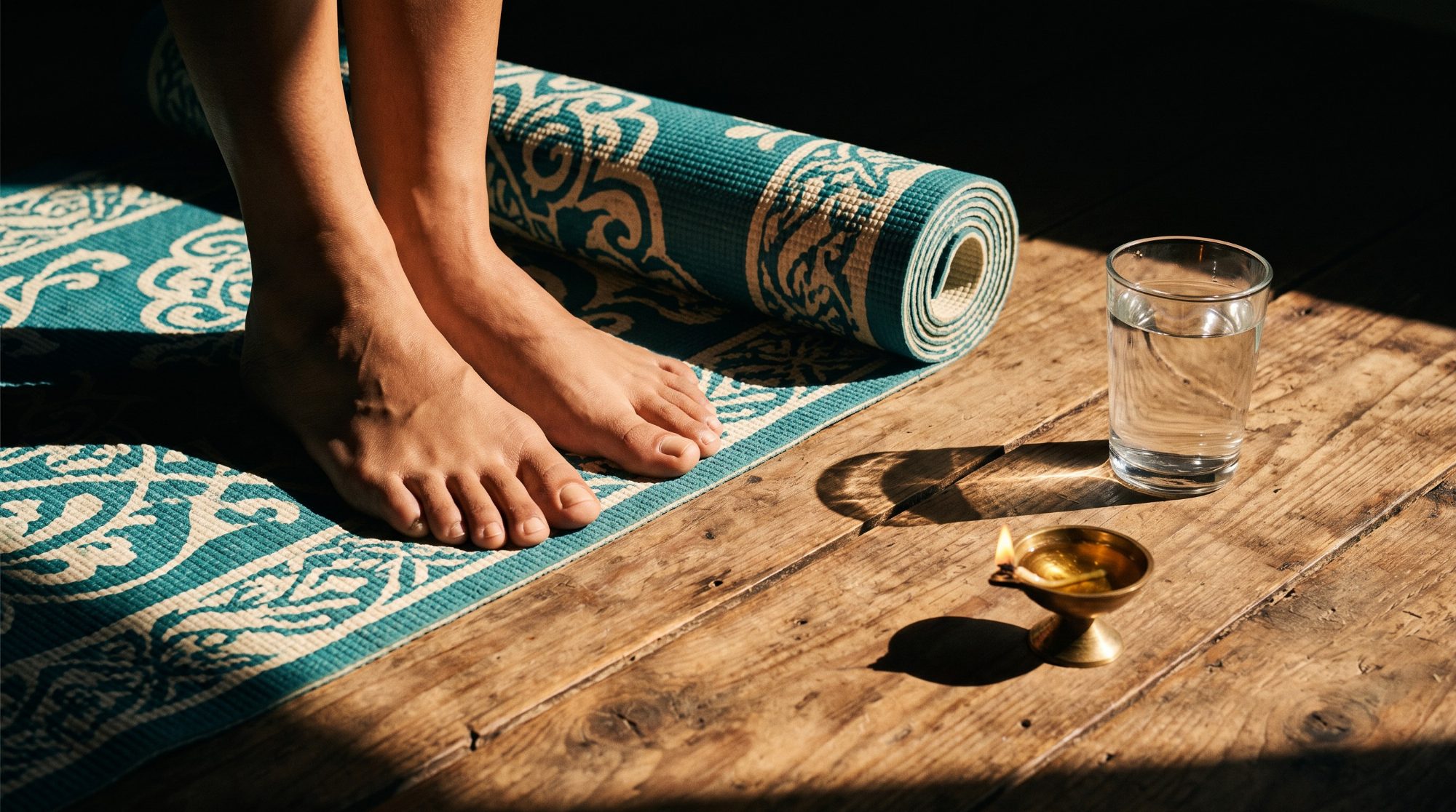
Minute 1: Stop and feel your feet. Pause what you're doing. Press both feet into the floor and notice their weight. Drop your shoulders away from your ears and unclench your jaw. This tells your body, "I'm here, and I'm held."
Minute 2: Lengthen your exhale. Breathe in through your nose for a count of four, then out slowly through your mouth for six to eight. Or try the physiological sigh: two quick sniffs in through the nose, then one long, unhurried breath out. Repeat for about a minute.
Minute 3: Look around slowly. Turn your head gently from side to side and let your eyes land on five things. Silently name them: "blue mug, window, green plant." Orienting like this tells your threat radar that you've checked, and the room is safe.
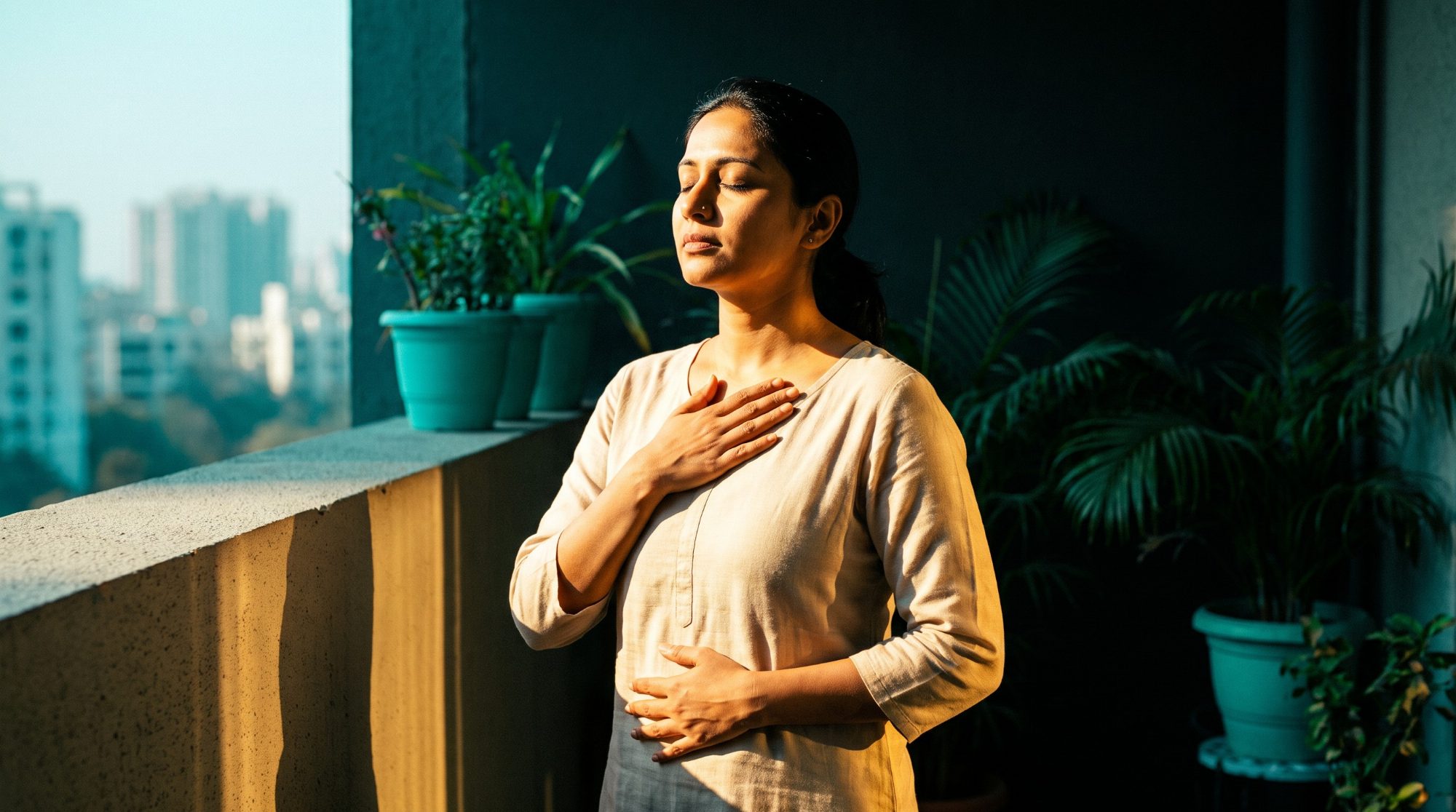
Minute 4: Change the temperature, touch your body. Splash cool water on your face or hold a cold glass in your hands. Or rest one hand on your chest and one on your belly and say quietly, "I'm safe enough right now."
Minute 5: Name it and choose. Say what's here: "This is fear." "This is anger." Remind yourself it is a wave and it will pass. Then choose one small next step: drink water, reply later, step outside, ask for five minutes.
Feet on the floor is the simplest anchor you carry with you everywhere.
Quick tools for common situations
Before a big meeting or presentation
Do two rounds of long exhales in the lift or the corridor, press your fingertips together firmly for a few seconds, then release. Remind yourself: excited and nervous feel almost the same in the body.
At 2 am when your mind is racing
Don't fight the thoughts. Put a hand on your chest, lengthen your exhale and describe the room to yourself in detail. If you're still wired after twenty minutes, get up, drink some water and do something dull in low light. (More in why your mind races at night.)
After an argument
Say "I need ten minutes, and I'll come back" and then actually come back. Walk, shake out your hands, or hold something cold. Don't rehearse the fight while you do it; just settle your body.
On a packed commute
Press your feet into the floor, grip the rail firmly for five seconds, then let go and exhale. Softly look at the far end of the carriage instead of the nearest face or screen.
When your child is melting down
You first. Breathe out slowly, drop your voice and your shoulders, and kneel or sit at their level. A calm adult body is the quickest way to calm a small one. (If you've already shouted, see why your child triggers you so strongly.)
Why it works, and its limits
A longer exhale tends to engage the body's rest-and-digest response, the "brake" on your stress system. Cool water on the face is known to slow the heart rate. Looking slowly around and naming what you see gives your attention something concrete and safe to hold. Research from Stanford on "cyclic sighing" found that a few minutes a day of this kind of breathing improved mood and reduced anxiety.
"A tool you practise when you're calm is a tool you can reach for when you're not."
This is first aid, not the whole treatment
These techniques work on the wave. They don't always change why the same wave keeps arriving. If you find yourself reaching for them daily, or the same people and situations flip you into overwhelm again and again, the stress is probably stored deeper, in old experiences your body still treats as live. Releasing that stored load is what lowers your baseline, so you need the emergency tools less often.
Go from quick fixes to deeper calm: Sukoon is two live evenings on Zoom where you are guided to release the stress your body has been holding, and leave with practices you can use anywhere.
Drink water and eat something. A stressed body burns through resources fast.
Move gently. A short walk helps the leftover adrenaline to clear.
Jot down the trigger. One line is enough: what happened, and what you felt in your body.
Decide about the conversation. Once you're settled, you can return to it with a clear head, or let it go.
Be kind to yourself. Needing to calm down isn't failing. It's your system doing its job.
Common questions
How long does it take to calm the nervous system?
Many people feel the intensity of a stress surge ease within a few minutes of slow breathing, grounding and cooling the face or hands. Full recovery depends on how stressed you were and how much sleep, food and support you have, and can take longer.
Why does deep breathing sometimes make me more anxious?
For some people, focusing on the breath increases awareness of the body and can feel uncomfortable, especially if the body has been tense for a long time. Try breathing with your eyes open, making the exhale gently longer rather than the inhale bigger, or choose a different tool such as cold water, walking or pressing your feet into the floor.
What is the fastest way to calm down from anger?
Step away if you can, breathe out slowly for longer than you breathe in, relax your jaw and shoulders, and cool your face or wrists with water. Wait until the physical surge has dropped before deciding what to say or do.
Are these techniques safe during a panic attack?
Slow breathing, grounding and cooling are gentle and help many people during panic. If you have frequent panic attacks, chest pain, fainting or any symptom that worries you, please see a doctor, and seek urgent care for chest pain.
An invitation
Go from quick fixes to deeper calm, with Sukoon
Sukoon means calm. Where this article gives you first aid, Sukoon helps you reach the root: two live evenings where you are guided to release the stress and emotion your body keeps carrying, so calm becomes your default and not an emergency skill.
Two live 90-minute evening sessions on Zoom
Guided release of stored stress, done gently and safely
Simple practices you can use the next time you feel overwhelmed
Runs every month, for ₹99, with a free healing toolkit included
Shenode Nair is a breakthrough coach and hypnotherapist based in Pune. For more than a decade he has helped professionals, founders, parents and homemakers release emotional patterns that logic alone couldn't shift.
Before founding InnerWorkz he spent years in corporate IT, including at Dell, so he knows life in survival mode from the inside. He is a certified NLP Practitioner (ABNLP), EFT Level 3 Practitioner (AAMET) and Matrix Reimprinting practitioner, and works with clients in Pune and online across India.
This article is for general education and isn't a substitute for medical or psychological care. If you have chest pain, fainting, frequent panic attacks or thoughts of harming yourself, please contact a doctor, a qualified mental health professional or emergency services. Shenode Nair is a certified coach and practitioner, not a counsellor, psychologist or medical doctor. Read our full disclaimer.